
Style journal
How to Store and Clean a Sequined Dress Without Losing Trim
The fabric, lining and trim of a sequined dress may respond differently to cleaning, while its weight can strain seams in storage. Read the care label,…
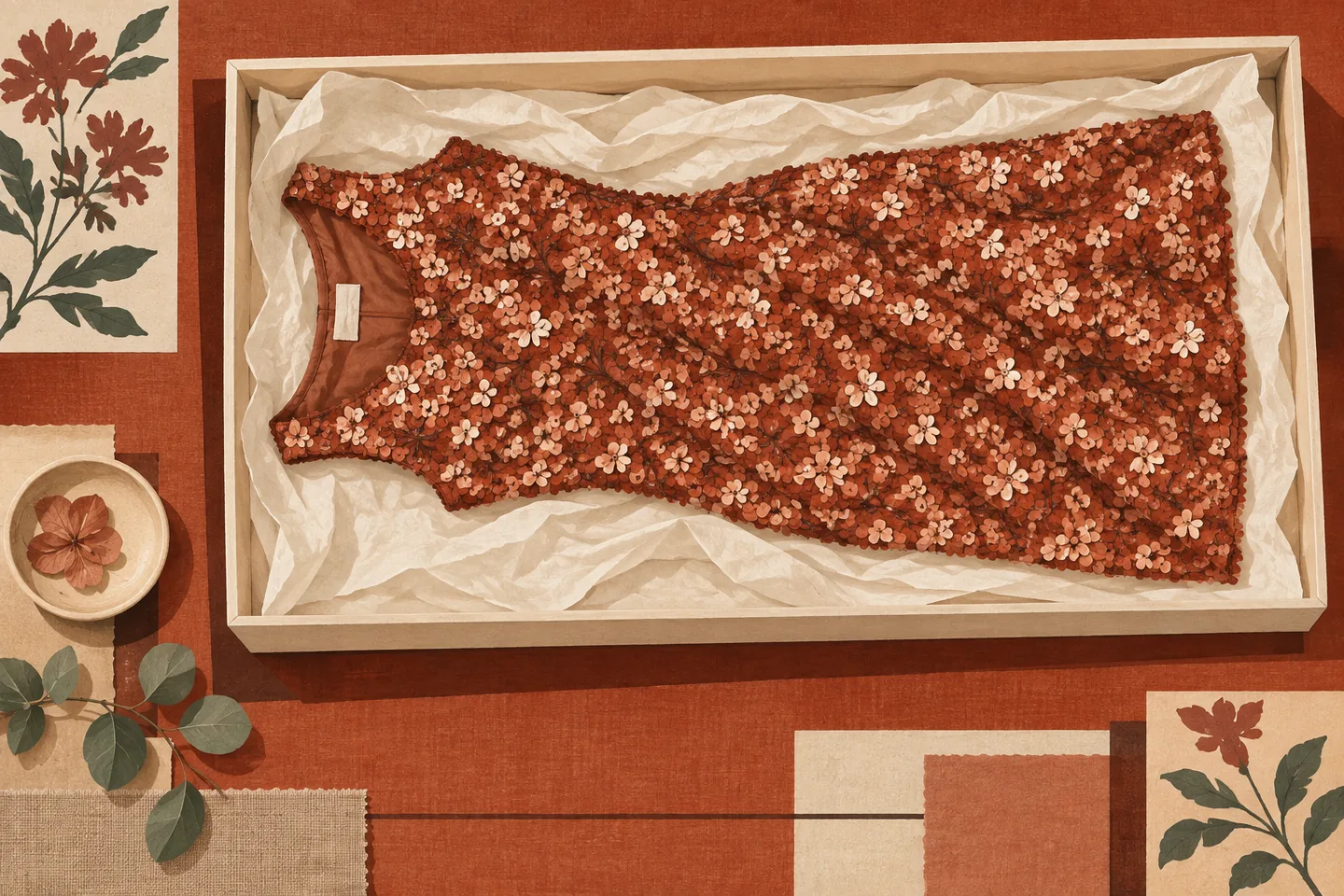
The fabric, lining and trim of a sequined dress may respond differently to cleaning, while its weight can strain seams in storage. Read the care label, inspect the stitching and check whether the dress is sound enough to handle before choosing a cleaning method.
Read the label, then inspect the whole dress
Read the sewn-in care label in full, including warnings about washing, drying, ironing and professional cleaning. Permission to wash does not necessarily permit a dryer or direct heat. Check detachable pieces for separate instructions, and keep the label with the dress.
In the United States, the Federal Trade Commission requires a reasonable basis for care instructions covering the whole garment, including its trim and lining. A label is the starting point for a modern dress, though wear may since have weakened it. The FTC’s care-label guidance explains the requirement.
Spread the dress on a clean surface in good light. Check the shoulders, neckline, underarms, side seams and hem for loose threads, missing sequins, splits or brittle fabric. Look inside for a torn lining or weakened seam. Note any damage before cleaning or storage.
Check how the decoration is attached. A cluster of beads can pull on a small area of lightweight fabric even when neighbouring sequins are secure. Gently turn the dress over to inspect the stitching from inside, supporting the decorated panel as you move it. Do not pull on a loose thread to see whether the rest will hold. Set aside any detached pieces so they can be matched to the damaged area.
Let the garment’s condition guide the cleaning decision
For a sound modern dress, follow its specific label. Hand washing, machine washing and dry cleaning are different instructions. If the label calls for professional cleaning, show the cleaner loose attachments and any marks. If it permits home washing, follow all its limits rather than borrowing a temperature, detergent or cycle from another dress.
Pause if the dress has changed since it was labelled. Loose sequins, a pulling shoulder seam or a separating lining can make routine cleaning a poor first step. Seek assessment or repair before further handling.
After wearing, check for marks and dampness; a full clean may be unnecessary. Let a sound dress dry completely before storage. Do not rub a stain through the sequins or assume a treatment safe for the lining is safe for the trim. Ask a professional about a mark if the label gives no clear direction.
If the label permits washing at home, prepare the dress according to those instructions and check the trim again before starting. Do not substitute a hotter wash, a different drying method or direct ironing because the main fabric seems sturdy. A treatment has to suit the complete garment, including coloured decoration, thread and lining. If the dress has a fresh mark, identify its position and tell the cleaner what caused it if you know; avoid experimenting with a stain remover first.
Vintage sequins call for a different threshold
An older dress without a reliable label is not automatically washable. Age, alterations and storage may have weakened its fabric and stitching. The Canadian Conservation Institute notes that threads holding beads and sequins can deteriorate, while heavy ornamentation can distort delicate fabric. Its guidance on caring for textiles and costumes describes these risks.
Do not test an unlabelled vintage dress with a home wash. Water can add weight and cause shrinkage, stretching or dye movement. Ordinary dry cleaning is not automatically safe either. The Canadian Conservation Institute says commercial dry cleaning of historic textiles requires a suitable custom treatment, and only strong pieces in excellent condition should be considered. Its basic textile-care guidance puts preventing damage ahead of perfect cleanliness.
For a valued vintage dress, ask a qualified textile conservator to assess its materials, alterations and stains before cleaning. Leaving a stable mark may be preferable when treatment would put the fabric or trim at greater risk.
Describe any past repairs and whether decoration has already fallen away. A missing care label leaves the cleaning method uncertain; it does not justify treating the piece like a contemporary synthetic dress. Avoid assuming that a previous owner’s cleaning method remains safe, as older threads and fabrics can weaken in storage. While waiting for advice, minimise handling and keep the dress supported and dry.
Know when to stop handling it
Stop a planned cleaning if sequins detach, stitches loosen or the fabric begins to split. Brittle or powdering fabric, areas of loss and broken seams are also warning signs. The Canadian Conservation Institute advises against even routine surface cleaning of historic textiles in those conditions. Do not try a brush, vacuum nozzle or stain treatment as a preliminary test.
Set a fragile dress on a clean, firm support rather than carrying it by its shoulders or hem. Keep detached trim with it for later assessment. If you see mould or signs of insects, separate the dress from other textiles and seek professional advice before returning it to storage.
Prepare the destination before lifting a delicate dress. Clear a surface, remove jewellery that can catch stitches and support as much of the fabric as possible from underneath. Avoid shaking it out, brushing the trim or repeatedly unfolding it to inspect one area. If a seam is splitting, leave the dress flat until it can be assessed rather than letting the damaged section carry its own weight.
Choose storage that supports the weight
For a heavily sequined dress, choose flat storage. A hanger concentrates weight at the shoulders and can strain seams. The Canadian Conservation Institute advises against hanging fragile or heavily decorated costumes; flat storage supports the textile across its length. A light, sound modern dress may hang, but decide by its weight and condition.
Use an acid-free or polyethylene box large enough to minimise folds. Line it with clean, unbleached muslin or acid-free tissue. Support the dress as you lay it in. Pad unavoidable folds with tissue or muslin, and leave room around raised trim so the lid cannot press on it.
Choose a box by the dress’s laid-out size, not merely by what will fit after tight folding. Arrange a broad fold only where necessary, with padding under the bend to avoid a sharp crease. Keep heavy decoration from bearing directly on another decorated section. If the garment is too large for one box, seek a storage arrangement that supports its length rather than forcing the hem into a small space.
Store the box in a dark, dry, well-ventilated place with stable conditions. Keep fasteners from catching the threads and do not stack heavy items on top. Ordinary cardboard and wood can release harmful acids; a dry cleaner’s plastic garment bag can trap moisture. These material and storage recommendations are set out in the Canadian Conservation Institute’s textile-care guide.
If a sound dress hangs for a short period, use a hanger that supports the shoulders and give it space. Do not let its weight pull from a thin strap or weak seam. Reassess its condition before longer storage.
Do not treat a garment bag as adequate support for a heavy dress: the hanger still carries the load. For a lighter dress that can safely hang, make sure neighbouring clothes do not press against the sequins or snag exposed stitching. A loose, breathable cover can keep off dust, but it should not compress the trim. If the shoulders begin to stretch, move the dress to flat storage.
Make the next inspection easy
Before closing the box, record loose trim or weak areas and keep the care label legible. Check occasionally for new losses, dampness or pests without repeatedly lifting the dress. When moving it, clear a surface first, support it from underneath and remove jewellery that might snag the threads.
Before buying an embellished dress, compare its listed materials with the care questions in this guide. www.hersecret.se is a Swedish-language clothing shop to use as a retail reference; a product listing never replaces the care label on the garment you own.